Air is easy to ignore until something invisible begins moving through it.
For decades, scientists and public health experts have studied how ventilation influences the spread of airborne particles inside homes, workplaces, hospitals, schools, and transportation systems. In recent years, that conversation has expanded far beyond laboratories and engineering manuals into everyday public awareness.
Ventilation — the movement and exchange of indoor and outdoor air — remains one of the simplest and most important tools for reducing exposure to certain airborne contaminants and infectious particles.
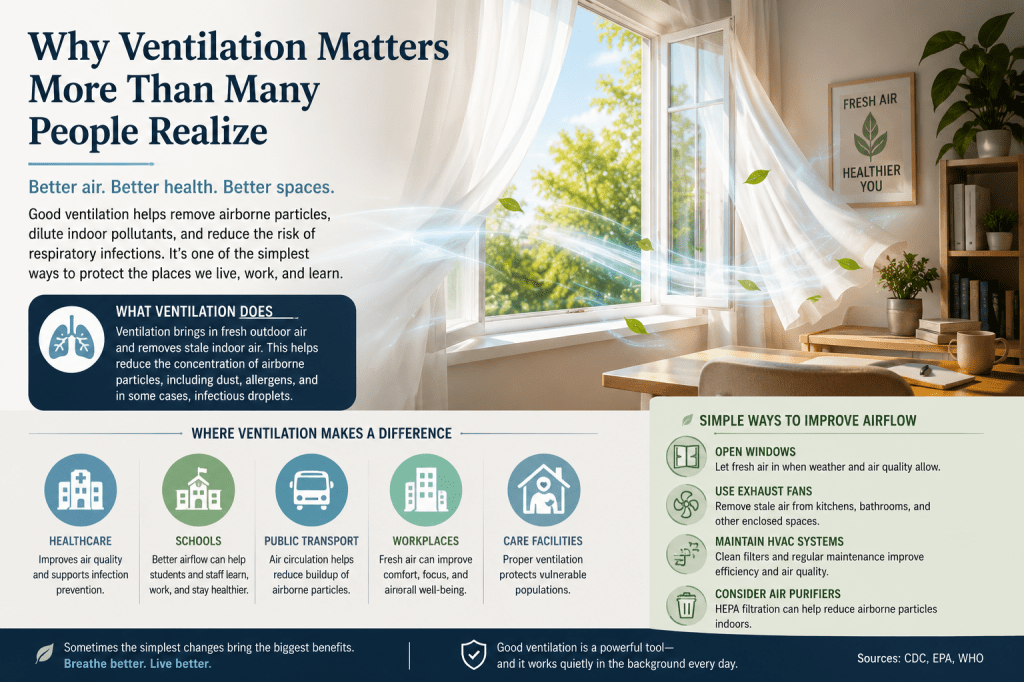
What Ventilation Actually Does
Good ventilation helps dilute and remove particles from indoor spaces. This may include dust, pollutants, smoke, allergens, and in some cases infectious respiratory particles.
According to the Centers for Disease Control and Prevention (CDC), improving airflow and filtration can reduce the concentration of airborne contaminants indoors.
This does not eliminate disease risk entirely, but it can help lower exposure under certain conditions.
Why Enclosed Spaces Matter
Poorly ventilated spaces allow airborne particles to accumulate over time, particularly in crowded or enclosed environments.
This principle has become increasingly important in discussions involving respiratory illnesses, workplace safety, and environmental health.
The Environmental Protection Agency (EPA) notes that indoor air quality can significantly affect health, especially since many people spend the majority of their time indoors.
Sometimes prevention is not dramatic. Sometimes it is simply fresh air moving through a room before invisible particles have the chance to linger too long.
Ventilation and Public Health
Ventilation is now considered a major part of modern public health strategy in many environments, including:
- Hospitals
- Schools
- Public transportation
- Office buildings
- Long-term care facilities
Experts often combine ventilation improvements with other preventive measures such as filtration systems, sanitation, and hygiene practices.
Researchers continue studying how airflow patterns influence transmission risks for various infectious diseases.
Practical Ways to Improve Indoor Airflow
Public health agencies recommend several ways to improve ventilation indoors:
- Open windows and doors when possible
- Use exhaust fans
- Maintain HVAC systems properly
- Use HEPA air filtration where appropriate
- Increase outdoor air circulation in crowded spaces
Simple airflow improvements may reduce indoor pollutant buildup and improve overall air quality.
Final Takeaway
Ventilation is one of those quiet systems most people rarely think about until public health events bring it into focus. Yet the movement of air through buildings can shape how particles accumulate, disperse, and affect human health over time.
In many ways, disease prevention is not only about medicine or technology. Sometimes it is also about understanding the invisible environments we move through every day.
Medical Disclaimer
This article is intended for informational and educational purposes only and should not be considered medical advice, diagnosis, or treatment.
Readers should consult qualified healthcare professionals regarding medical concerns or environmental health questions.
 Hantavirus Outbreak Watch