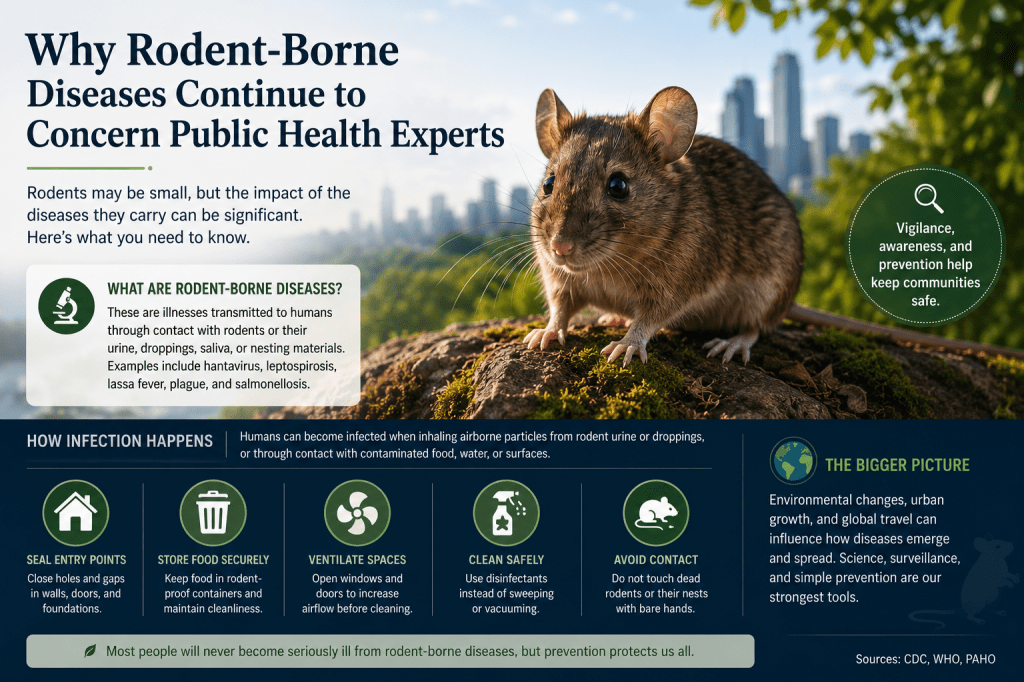
There are certain animals that exist quietly alongside human civilization — often unnoticed until illness suddenly brings them into focus. Rodents are among the most studied of them.
From rural cabins to crowded cities, rodents have long been linked to the spread of infectious diseases affecting humans. While modern sanitation and public health systems have dramatically reduced many risks, experts continue monitoring rodent-borne illnesses because of their ability to emerge unexpectedly in changing environments.
According to the Centers for Disease Control and Prevention (CDC), rodents can carry viruses, bacteria, and parasites capable of infecting humans through contaminated droppings, urine, saliva, or direct contact. Some diseases may also spread indirectly through ticks, fleas, or contaminated food sources.
What Are Rodent-Borne Diseases?
Rodent-borne diseases are illnesses associated with rats, mice, and other rodent species. Some of the better-known examples include:
- Hantavirus Pulmonary Syndrome (HPS)
- Leptospirosis
- Lassa fever
- Plague
- Salmonellosis
Different diseases occur in different regions of the world depending on local rodent populations and environmental conditions.
In the United States, hantavirus remains one of the most closely monitored rodent-associated illnesses, particularly in western and southwestern states where deer mice are commonly found.
How Transmission Happens
Most rodent-borne illnesses do not spread casually between people. Instead, infection often occurs through environmental exposure.
The CDC states that humans may become exposed when particles contaminated with rodent urine or droppings become airborne and are inhaled, particularly in enclosed or poorly ventilated areas such as sheds, cabins, garages, or storage spaces.
This is one reason public health agencies continue emphasizing safe cleaning practices after rodent infestations.
Why Experts Continue Monitoring These Diseases
Public health experts study rodent-borne diseases closely because environmental conditions can influence outbreak risks.
Climate shifts, urban expansion, deforestation, and changing wildlife habitats may alter how humans and rodents interact. Researchers have also noted that global travel and shipping networks can increase the complexity of disease surveillance efforts.
The World Health Organization (WHO) describes zoonotic diseases — illnesses transmitted between animals and humans — as an ongoing area of global health concern requiring coordinated monitoring and preparedness.
Many rodent-borne illnesses remain relatively rare. However, when outbreaks occur, rapid detection and communication become important tools for limiting spread and reducing public fear.
Prevention Remains the Best Defense
Health agencies continue recommending several practical prevention steps:
- Seal holes and entry points in buildings
- Store food securely
- Avoid direct contact with rodents or rodent nests
- Ventilate enclosed spaces before cleaning
- Use disinfectants rather than sweeping or vacuuming droppings
Simple precautions often remain highly effective in reducing risk.
Final Takeaway
Rodent-borne diseases are part of a larger story about the intersection between humans, wildlife, and environment. Most people will never encounter serious illness from these infections, but public health experts continue monitoring them carefully because outbreaks can emerge quietly and unpredictably.
Awareness, preparation, and responsible public health communication remain far more useful than panic.
Medical Disclaimer
This article is intended for informational and educational purposes only and should not be considered medical advice, diagnosis, or treatment.
Readers should consult licensed healthcare professionals regarding medical concerns or symptoms.
 Hantavirus Outbreak Watch